

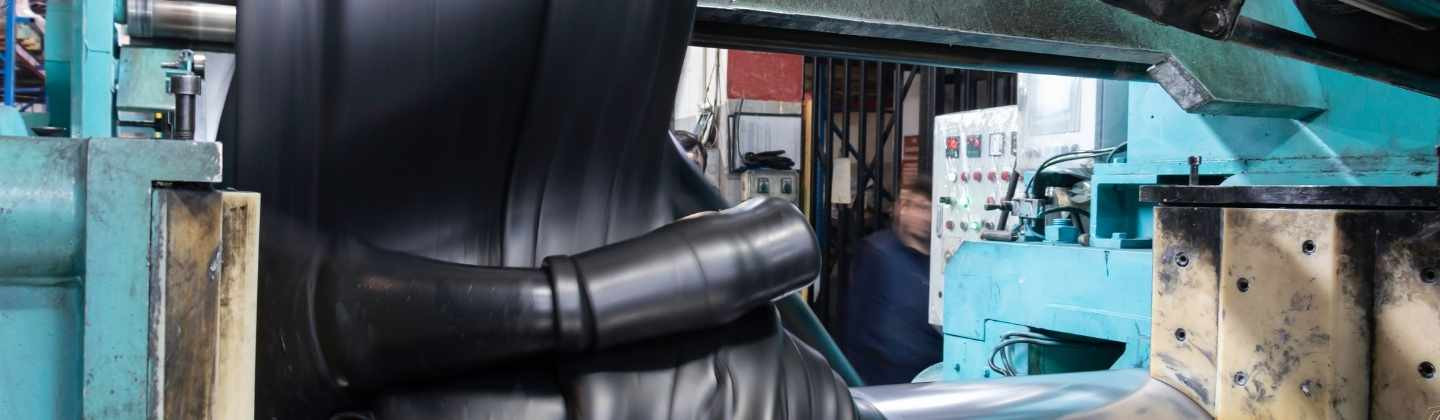
The function of zinc oxide in rubber compounding is fundamental to the industry, making it an indispensable raw material for producing high-quality rubber products.
For manufacturers focused on delivering superior performance, understanding the specific roles of zinc oxide is crucial for formulation and process control.
Zinc oxide (ZnO) is far more than just a filler; it is a critical chemical agent that drives the key reactions and performance enhancements in rubber production. Its primary roles ensure that the final product meets stringent quality and durability standards.
The most significant function of zinc oxide in rubber compounding is its role as an activator for the vulcanization process.
Vulcanization, which converts raw, sticky rubber into a strong, elastic, and durable material, relies heavily on sulfur. However, sulfur alone reacts too slowly and inefficiently. Zinc oxide steps in to accelerate this reaction.
In the presence of stearic acid (or other fatty acids), zinc oxide forms zinc salts (like zinc stearate). These salts react with the accelerators in the formulation to produce intermediate complexes.
These complexes are highly reactive and facilitate the cross-linking of the rubber polymer chains by sulfur, dramatically speeding up the cure rate and ensuring a uniform cross-link density. This efficient activation is key to achieving optimal physical properties in the shortest time.
Beyond activation, zinc oxide also acts as a reinforcing filler and a processing aid. While not the primary reinforcing agent, it contributes to the overall stiffness and hardness of the rubber.
Furthermore, the presence of zinc oxide helps in the dispersion of other ingredients within the rubber matrix during the mixing phase, leading to a more homogeneous compound.
This improved dispersion is vital for consistency and reliability across batches of products, ensuring that every tire, seal, or belt produced by your company performs as expected.
The inclusion of zinc oxide in rubber formulations provides distinct advantages that directly translate to superior product quality and a competitive edge in the market.
The activation of cross-linking is the direct cause of the massive improvement in the mechanical properties of the finished rubber.
By optimizing the cross-link network, the use of high-quality zinc oxide significantly improves several critical performance metrics:
Tensile Strength: The maximum stress the material can withstand while being stretched.
Tear Resistance: The ability to resist the growth of a cut or nick.
Abrasion Resistance: The material’s ability to withstand surface wear from friction.
These improvements mean that your products, whether they are heavy-duty conveyor belts, industrial hoses, or automotive components, will last longer and withstand harsher operational environments. The right function of zinc oxide in rubber compounding ensures this enhanced durability.
Rubber goods are often subjected to challenging conditions, including heat generated from friction and exposure to the elements. Zinc oxide is an effective stabilizing agent. It works to:
Increase Heat Resistance: By optimizing the cross-linking, ZnO helps the rubber maintain its structural integrity at elevated temperatures, reducing the risk of reversion (de-vulcanization).
Protect Against Aging: It acts as a mild antioxidant and stabilizer, helping to protect the rubber from degradation caused by oxygen, ozone, and heat exposure over time.
UV Protection: In light-colored or translucent compounds, the use of zinc oxide can provide a degree of protection against degradation from ultraviolet (UV) radiation.
These properties are essential for outdoor applications, guaranteeing that your rubber components maintain their performance characteristics throughout their service life.
The specific characteristics of the zinc oxide powder, such as particle size, purity, and surface area, can profoundly affect the vulcanization kinetics and the final properties of the rubber compound.
Therefore, sourcing a consistent and high-purity grade is not just an operational necessity but a strategic decision for rubber industry.
For clients who require a reliable partner in their supply chain, we understand that consistency and quality are non-negotiable.
Our commitment is to provide the finest materials that support the demanding function of zinc oxide in rubber compounding applications. The consistency of our zinc oxide ensures that your production processes remain stable and your end products reliably meet the required specifications.
In conclusion, the successful manufacturing of durable, high-performance rubber products hinges on the precise and powerful function of zinc oxide in rubber compounding.
As a crucial activator and performance enhancer, it is a material where quality directly correlates with final product success. When selecting a supplier, look for proven consistency and purity.
For those seeking a dependable source of high-quality zinc oxide for industrial applications, look no further. As a leading manufacturer in the region, Indo Lysaght provides the essential, high-grade zinc oxide that rubber compounders trust to achieve optimal performance and durability. We are dedicated to supporting your compounding needs with products that guarantee consistent results.
