

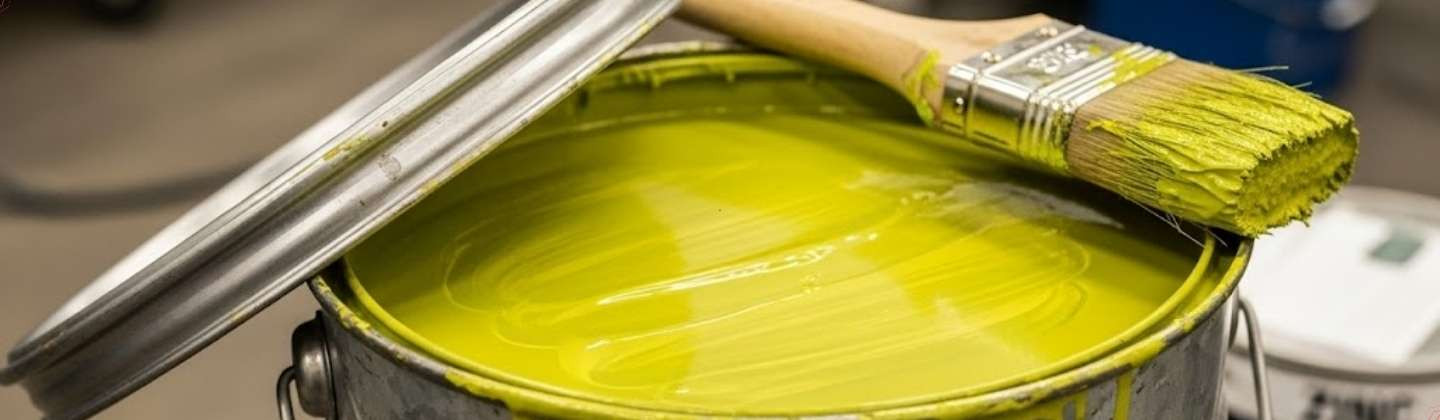
In industrial metal protection, choosing the right primer can significantly impact durability and performance. One widely used option is zinc cromate paint, recognized for its corrosion resistance across construction, automotive, aerospace, and heavy industry applications.
Another is zinc-rich primer, a coating formulated for more demanding environments where sacrificial protection is critical.
While both are used to prevent rust and extend the life of metal structures, their composition, protective mechanisms, and areas of best application differ. Understanding these distinctions helps industries select the most efficient protective system for their needs.
Zinc cromate paint is primarily formulated from zinc chromate pigment, a yellow-green compound valued for its strong anti-rust capabilities. The pigment is blended with alkyd or solvent-based resins to create a durable coating that adheres well to metals.
This formulation produces a primer layer that serves as a foundation for additional coatings, ensuring strong adhesion and improved longevity of the protective system.
The main advantage of zinc cromate paint lies in its barrier protection. Once applied, it forms a tough coating that prevents moisture and oxygen from reaching the underlying steel or iron.
This barrier effect significantly reduces the risk of rust, especially in environments where humidity, salt, or industrial pollutants are present.
In addition, the coating dries quickly and provides a cost-effective solution for medium-duty applications, making it suitable for industries seeking a balance of performance and efficiency.
For effective use, proper surface preparation is crucial. Metal surfaces must be thoroughly cleaned of dust, rust, oil, or old coatings before application.
Zinc cromate paint can then be applied through various methods, including brushing, rolling, or spraying, depending on the scale of the project. Typically, one or two coats are sufficient to establish reliable coverage.
This straightforward process has made it a practical choice for industries needing quick turnaround without compromising protective performance.
Unlike zinc cromate paints, zinc-rich primers contain very high levels of metallic zinc dust often more than 80 percent by weight of the pigment.
This high zinc content is bound in resins such as epoxy, alkyd, or polyester, resulting in primers available in different types. Variants include solvent-based formulations, water-based coatings, and high-performance two-component epoxy systems tailored for harsh environments.
The defining characteristic of zinc-rich primers is their galvanic or sacrificial protection mechanism. When applied to steel, the zinc particles corrode in preference to the steel substrate, acting as a protective shield even if the coating film is scratched or damaged.
This sacrificial effect ensures continuous protection, making zinc-rich primers particularly effective in aggressive atmospheres such as coastal regions, chemical plants, or heavy industrial facilities.
Zinc-rich primers also offer versatility when integrated into multi-layer paint systems. They are compatible with a broad range of topcoats, including polyurethane, epoxy, and acrylic coatings.
This adaptability allows industries to design protection systems that balance durability, aesthetics, and cost efficiency. By combining zinc-rich primers with the right topcoat, metal structures can achieve long-term resistance against extreme corrosion challenges.
Both zinc cromate paint and zinc-rich primers serve essential roles in industrial corrosion protection, but their applications are distinct.
Zinc cromate paint is best suited for moderate conditions where ease of application and cost-effectiveness are priorities. Zinc-rich primers, on the other hand, are indispensable in highly corrosive environments where sacrificial protection provides unmatched durability.
For companies involved in producing these coatings or related metal-protection solutions, securing consistent raw materials is critical. Indo Lysaght stands out as a trusted zinc ingot supplier, delivering high-quality zinc inputs that support the production of zinc-rich primers and other protective coatings.
With reliable materials at the foundation, industries can ensure long-lasting performance in metal protection systems.
