

Zinc oxide is widely used in industrial formulations, yet its behavior in water often surprises formulators. Understanding zinc oxide solubility in water is essential for manufacturers developing coatings, ceramics, rubber compounds, personal care products, and other water-contacting applications.
At Indo Lysaght, we supply zinc oxide designed to support consistent performance across demanding production environments, including applications that require careful attention to cara produksi kosmetik yang baik.
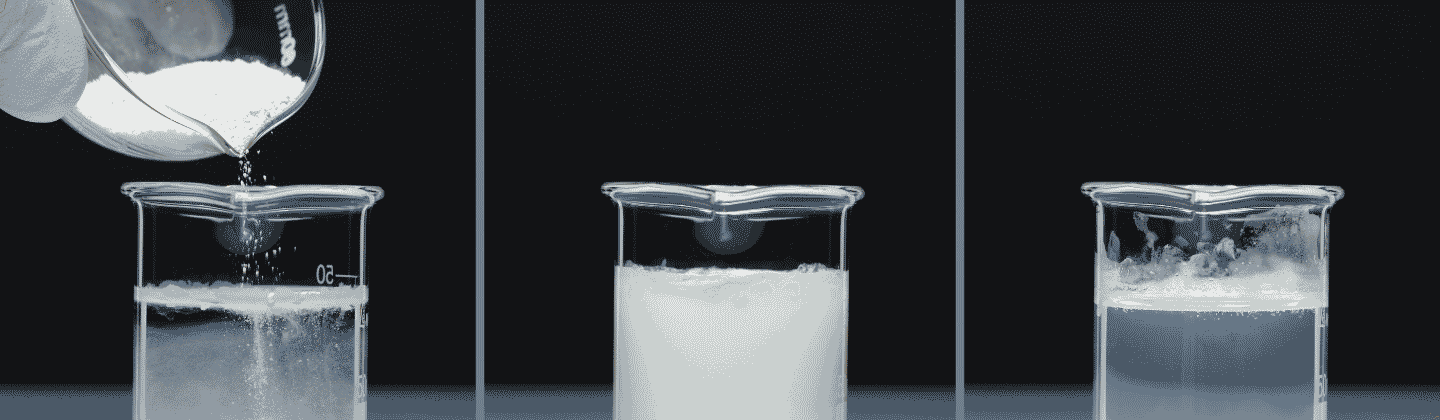
Zinc oxide (ZnO) is an inorganic white powder with very limited solubility in water. Under normal, near-neutral conditions, only a small fraction dissolves, while most of the material remains as solid particles suspended in the liquid.
Zinc oxide has extremely limited solubility in water. In pure water at room temperature, reported solubility values for bulk ZnO are generally low, ranging from about 1.6 to 6.5 mg per liter at 298 K, depending on the study and testing conditions.
For practical manufacturing purposes, this means zinc oxide does not form a true, fully dissolved solution in ordinary water. Instead, it typically disperses as fine particles. This characteristic is valuable in formulations where zinc oxide needs to remain present as a solid functional ingredient, such as in coatings, pigments, ceramics, and certain personal care applications.
Our zinc oxide products are manufactured to meet the requirements of industrial producers that need dependable material behavior from batch to batch.
The low zinc oxide solubility in water results from its stable solid structure and the strong chemical interactions between zinc and oxygen atoms. Water alone does not provide enough energy or chemical driving force to break down the crystal lattice quickly.
Zinc oxide commonly crystallizes in a hexagonal wurtzite structure, which is thermodynamically stable under ambient conditions. In this structure, zinc and oxygen atoms are arranged in a tightly bonded lattice, making it difficult for water molecules to separate individual ions.
This stability explains why ZnO remains largely intact when mixed into neutral water. The solid particles may settle, suspend, or disperse depending on particle size and formulation conditions, but they do not readily dissolve.
The bond between zinc and oxygen has both ionic and covalent character. This strong interaction holds the ZnO lattice together and limits the release of zinc ions into water.
When zinc oxide does dissolve slightly, it does not dissolve as intact ZnO molecules. Instead, it interacts with water and releases zinc-containing species such as Zn²⁺ and zinc hydroxide complexes.
Neutral water lacks sufficient acidity or alkalinity to significantly attack the ZnO surface. Without a strong chemical driving force, the dissolution reaction remains slow and limited.
This is why zinc oxide can be dispersed in water-based systems without rapidly disappearing into solution. For manufacturers, this supports predictable handling, stable dispersion, and controlled performance in the final product.
Although bulk zinc oxide has low solubility, particle characteristics still matter. Smaller particles have a larger surface area relative to their mass, which can increase the rate at which the material interacts with water.
Research on nanosized ZnO shows that reducing particle size can enhance apparent solubility compared with bulk material. Therefore, particle size distribution, purity, and dispersion quality are important considerations when selecting zinc oxide for water-based industrial formulations.
pH has a major influence on zinc oxide solubility in water. ZnO is amphoteric, meaning its solubility increases under sufficiently acidic or strongly alkaline conditions, while it remains relatively low near neutral pH.
Acidic environments increase zinc oxide dissolution. As pH decreases, hydrogen ions react with the ZnO surface and help break down the solid structure more effectively.
At pH 4, for example, Zn²⁺ becomes the dominant soluble zinc species, accounting for nearly all dissolved zinc in the studied conditions. This is important for processes involving acidic cleaning, chemical processing, or formulation adjustments.
When zinc oxide dissolves in acid, it forms soluble zinc salts and hydrated zinc ions. For instance, ZnO reacts with hydrochloric acid to produce zinc chloride and water.
This reaction can be represented as:
ZnO+2HCl→ZnCl2+H2O
The resulting zinc species are far more soluble than the original zinc oxide solid. This behavior is relevant in chemical manufacturing, surface treatment, and other processes where controlled dissolution is required.
Around neutral pH, zinc oxide remains sparingly soluble. In this range, dissolved zinc may exist as Zn²⁺, ZnOH⁺, Zn(OH)₂, and other hydroxide-related species, but the overall dissolved concentration stays low.
For industrial users, this limited solubility is often an advantage. It allows zinc oxide to function as a stable solid ingredient while still offering controlled reactivity when process conditions change.
Selecting the right zinc oxide involves more than solubility alone. Particle size, purity, consistency, and intended application all affect dispersion, reactivity, and final product performance.
At Indo Lysaght, we manufacture zinc oxide and zinc-related products with high-quality standards for industrial applications. Our zinc oxide is available in standard 25 kg packaging with inner liners, supporting secure handling and storage for production facilities.
If your operation requires zinc oxide with dependable quality for water-contacting or pH-sensitive applications, contact Indo Lysaght to discuss the right specification for your production needs.
